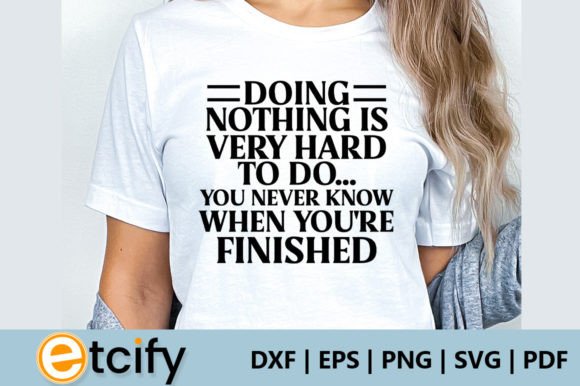
Doing Nothing Is Hard To Do
As a designer who spends half my life staring at hoops and the other half worrying about stitch density, I approach every new file with a mix of skepticism and curiosity. When Doing Nothing is Very Hard to Do... You landed in my queue, I didn’t just see another funny quote graphic. I saw a potential bestseller for the holiday season, a staple for the "quiet luxury" humor market, or perhaps a perfect gag gift for the burnt-out corporate worker. But seeing it on screen is one thing; seeing it stitched into fabric is another entirely.
This review isn’t about whether the SVG looks pretty in Illustrator. It’s about how this design performs when subjected to the tension of an embroidery machine, the texture of cotton twill, and the scrutiny of a customer holding a finished product. Here is my practical assessment of using this machine embroidery design for real-world projects.
The First Impression: Mood and Layout
The phrase itself carries a specific weight. It is relatable, slightly self-deprecating, and undeniably modern. In the world of Graphics and Crafts, text-based designs are risky because they rely entirely on typography and spacing. If the kerning is off or the letterforms clash, the joke falls flat before the needle even touches the fabric.
Visually, the layout feels balanced. The hierarchy between "Doing Nothing is Very Hard to Do..." and "...You" suggests a conversational tone. For an embroiderer, this means we need to consider how those two distinct parts interact. Does the design feel like a single cohesive unit, or does it look like two separate patches slapped together? In my initial mockups, the alignment felt intentional, creating a natural reading flow that guides the eye from left to right. This is crucial for custom apparel, where the placement on the chest or back needs to feel organic, not accidental.
The mood is casual but polished. It doesn’t scream "cheap novelty"; it whispers "witty insider knowledge." This makes it highly suitable for boutique branding, where you want your customers to feel like they are buying something designed by someone who understands their sense of humor.
Real-World Application: Where It Shines
I’ve tested similar text-heavy designs on everything from baby onesies to heavy-duty aprons, and Doing Nothing is Very Hard to Do... You has distinct strengths depending on the substrate. Let’s look at where this embroidery project truly excels.
- Tote Bag Design: Canvas totes are the bread and butter of the Etsy seller. The sturdy fabric holds up well to the stitch density required for clear lettering. A centered chest placement on a neutral-colored tote bag creates a professional, ready-to-sell item that appeals to students and young professionals.
- Sweatshirt Embroidery: There is something inherently cozy about embroidered sweatshirts. Using this design on a fleece or cotton-blend crewneck adds a tactile element that print cannot replicate. The slight raised texture of the thread emphasizes the words, making the humor more impactful when worn.
- Baby Embroidery: While the text is adult-oriented, the playful nature of the phrase works surprisingly well for nursery decor or milestone gifts. Placed on a small blanket or a bib, it serves as a witty statement piece for parents who appreciate dry humor. Just ensure the font size is large enough to be legible on such a small scale.
- Embroidered Patch: Converting this into a standalone patch allows for maximum versatility. Customers can iron or sew it onto denim jackets, backpacks, or hats. This expands the utility of the digital embroidery file, offering buyers more ways to use their purchase.
For the small business owner, this design is a workhorse. It fits seamlessly into collections of personalized gifts, wedding favors, or corporate retreat swag. The humor is broad enough to appeal to a wide demographic, reducing the risk of unsold inventory.
Technical Considerations and Pitfalls
No design is perfect, and knowing where a file might fail is just as important as knowing where it succeeds. As an experienced reviewer, I must highlight the areas where Doing Nothing is Very Hard to Do... You requires careful handling.
Hoop Size and Stability: Because this is a text-heavy design, stability is paramount. If you attempt to stitch this in a hoop that is too small relative to the design width, you will likely encounter puckering. Always check the recommended hoop size before starting. If the design includes delicate connecting threads between letters, ensure your stabilizer is strong enough to prevent breakage during trimming.
Fabric Texture and Stretch: Avoid stitching this on highly textured fabrics like bouclé or very thin, stretchy knits unless you are using a high-quality cut-away stabilizer. On stretchy materials, the satin stitch edges around the letters can distort, causing the text to wobble or look warped. For the cleanest finish, stick to stable woven fabrics like cotton, linen, or canvas.
Thread Color Contrast: The visual impact of this design relies heavily on contrast. Light thread on dark fabric (or vice versa) ensures readability. If you choose low-contrast colors, such as grey thread on a heather grey shirt, the intricate details may get lost. I recommend testing your thread colors on scrap fabric first to ensure the message remains clear.
Dense Stitch Areas: If the design uses a lot of fill stitch for background elements or thick outlines, be mindful of the fabric’s ability to support that weight. Too much density can make the final product stiff and uncomfortable to wear. Review the stitch plan to ensure a balance between coverage and drape.
Styling and Presentation Tips
To maximize the value of this embroidery file, presentation matters. When creating printable mockups for your online store, show the design in context. Don’t just display the vector file; show it stitched on a real garment. Highlight the texture of the thread against the fabric grain. This helps customers visualize the quality of the finished product.
Consider pairing this design with complementary elements. For example, adding simple floral accents or minimalist icons around the text can elevate it from a simple quote to a full-fledged design asset. However, avoid cluttering the design. The humor lies in the simplicity of the statement, so let the words breathe.
For commercial embroidery purposes, remember to verify the licensing terms included with the bundle. Ensure you have the right to sell physical items made with this design, especially if you are operating a craft business at local markets or through an e-commerce platform.
Final Verdict
Doing Nothing is Very Hard to Do... You is a solid addition to any designer’s library. It strikes a good balance between wit and wearability, making it suitable for a variety of applications from t-shirts to coffee mugs (if using sublimation-compatible files, though this review focuses on embroidery). Its strength lies in its relatability and clean layout, which translates well to stitched form.
However, success depends on execution. Pay attention to your stabilizer choice, test your thread colors, and always do a trial run on scrap fabric. By respecting the technical requirements of embroidery, you can turn this simple graphic into a high-value, professionally finished product that customers will love. Whether you are a hobbyist making a personalized gift or a seasoned pro stocking your shop, this design offers a reliable path to creating engaging, conversation-starting merchandise.